

COMPLETE PERSIAN COURSE
MASTER THE LANGUAGE AND CULTURE IN 30 DAYS
THE PERSIAN LANGUAGE: GATEWAY TO YOUR FUTURE
Persian is a difficult language to learn. It’s distinctive features can be found in its Vocabulary, Grammar and Pronunciation. The challenge with many learning methods is that they only take you part of the way. Mobile apps are fun and motivating, but they often stay on the surface, giving you basic vocabulary without real depth in grammar or conversation. Live courses offer great interaction with teachers but can be inflexible and expensive, making them difficult to sustain long term. University programs are academically rigorous, but they demand years of commitment and come with high living and tuition costs. Textbooks provide structure and clarity, but they lack immersion and often don't provide the practical information that learners actually need.
If you are serious about learning Farsi, commit to a method that makes you actually speak the language. With the right system, you can go beyond memorised phrases and truly speak, read, and think in Persian. The journey is demanding, but the rewards — access to Persian news, cinema, music, history, personal connections and work opportunities — are immense. The time to start is now, with our Complete Persian Master Course that has been designed to give you nothing less than complete fluency.
Start your Persian langauge journey with us today!


Welcome on behalf of the Persian Institute!
If you wish to learn Farsi you are in right place. We have created the world's most Complete Persian Master Course to take you from absolute beginner to native speaker in 30 days. In this section you will find all the information and answers you need about learning Persian, such as: the best learning method, reasons to learn this language, the costs associated, the difficulty spikes to watch out for, how to improve your prior skills if you are stuck in a plateau, as well as the differences and similarities to other commonly spoken languages.
Persian, known as "Farsi" in its native form, is one of the world’s most historically significant and poetic languages. It belongs to the Indo-Iranian branch of the Indo-European language family, setting it apart from the Semitic and Turkic languages spoken in neighboring regions. Persian is primarily spoken in Iran, where it is the official language, but it also has speakers in Afghanistan (as Dari) and Tajikistan (as Tajik), as well as in diaspora communities worldwide. With approximately 100 million speakers, Persian is one of the most widely spoken and influential languages in the Middle East and Central Asia.
Unlike its Arabic-influenced neighbors, Persian has retained its Indo-European roots, sharing linguistic ties with languages such as Kurdish, Pashto, and even English. However, over centuries, it has absorbed thousands of loanwords from Arabic, Turkish, French, and Russian, shaping its unique vocabulary and linguistic richness.
NATURAL METHOD TO LEARN PERSIAN
Our language courses are based on the Natural Method, also known as the Natural Approach, developed by linguist Stephen Krashen and language educator Tracy Terrell. This approach focuses on creating an environment that mimics how individuals naturally acquire their first language, emphasizing comprehension, communication, and a stress-free learning experience.
While other language courses rely on rote memorization and drills, a heavy academic approach to grammar, repetitive exercises, expensive and time-consuming formal tutoring sessions or ineffective and shallow phone apps, we will have you gradually build your language skills like a child learning his/her mother tongue.
There are essentially 5 Core Principles in the Natural Method:
Comprehensible Input (i+1)
Learners acquire a language when they are exposed to materials slightly beyond their current level of understanding (represented as i+1). By hearing or reading content they mostly understand, learners can gradually internalize new vocabulary and grammar structures.Focus on Communication
The Natural Method prioritizes fluency and the ability to communicate over grammatical perfection. Errors are seen as a natural part of the learning process and are not heavily penalised, reducing anxiety and encouraging learners to express themselves.Emotional Element
Emotional factors like anxiety, motivation and enjoyment greatly influence language acquisition. When learners are in a relaxed state, achieved by removing the anxiety linked to the pressure to produce perfect grammar, it is easier for them to get through the initial phase which is arguably the hardest and where most give up. It is also proven to be easier for the brain to absorb and retain new information if the learner is actually interested in the language and its underlying culture, which is why he have included extensive cultural insights, historical and modern pop culture elements in our language course.
Stages of Language Acquisition
Scholars have identified the following stages in the language acquisition process of young children:Pre-production: The "silent period," where learners focus on listening and understanding without speaking.
Early Production: Learners begin using simple words and phrases.
Speech Emergence: Learners can construct longer sentences and express ideas more freely.
Intermediate Fluency: Learners develop more complex language skills and can engage in meaningful conversations.
Advanced Fluency: Learners achieve near-native proficiency.
The goal of our courses is thus to mimic the natural language acquisition process without overwhelming the learner with long and tedious lessons but ensuring gradual gains so that he/she remains committed to his/her fluency goal.
Meaningful Interaction
Instead of rote memorization of single words and grammar rules over and over, the Natural Method encourages activities that involve real-world communication to help retain information. This is why we have included storytelling and role-playing scenarios that simulate everyday situations, with exercises that allow the learner to understand his/her current level and thus improve upon specific elements.


EXPAND YOUR KNOWLEDGE
If you are serious about learning Farsi, we recommend that you download the Complete Persian Master Course.
You will receive all the information available on the website in a convenient portable digital format as well as additional contents: over 15.000 Vocabulary Words and Useful Phrases, in-depth explanations and exercises for all Grammar Rules, exclusive articles with Cultural Insights that you won't find in any other textbook so you can amaze your Persian-speaking friends and business partners thanks to your knowledge of their country and history.
With a one-time purchase you will also get hours of Podcasts to Practice your Persian listening skills as well as Dialogues with Exercises to achieve your own Master Certificate.
Start speaking Persian today!


Why learn Persian?
5 reasons to learn Persian
It’s Beautiful! Discover One of the World’s Great Literary Languages
Persian is a beautiful, elegant, and deeply expressive language with a long cultural history. Known for its poetic sound, rich vocabulary, and graceful style, Persian opens the door to one of the world’s greatest literary traditions. From classical poets such as Rumi, Hafez, Saadi, and Ferdowsi to modern music, cinema, and storytelling, Persian allows you to experience art and emotion in a uniquely powerful way. Learning Persian is like entering a refined cultural world that has inspired people across Asia, the Middle East, and beyond for centuries.Gain a Deeper Understanding of History and Culture
Learning Persian gives you access to a rich and influential civilization that has shaped history, literature, philosophy, science, architecture, and art. Persian culture has played a major role in the development of empires, trade routes, courtly traditions, and intellectual life across a vast region. From ancient Persia and the Achaemenid Empire to the Sasanian period, Islamic civilization, the Persianate world, and modern Iranian culture, the Persian language connects you with a remarkable historical legacy that is often much deeper and more diverse than people expect.Persian Speakers Appreciate When You Speak Their Language
Persian speakers are often delighted when someone makes the effort to learn their language. Even a few simple phrases can create a warm and personal connection. Saying “Salam” for hello or “Merci” and “Moteshakkeram” for thank you can immediately show respect and curiosity. Persian is not only a tool for communication, but also a way to understand hospitality, politeness, humor, poetry, family values, and everyday conversation in a more authentic way.Connect with the Wide Persian-Speaking World
Persian is not limited to one country. It is closely connected to Iran, Afghanistan, where a variety of Persian is known as Dari, and Tajikistan, where Tajik is a related Persian variety written in Cyrillic script. Persian has also influenced many neighboring languages and cultures, including Urdu, Turkish, Arabic, Kurdish, Armenian, and several Central Asian languages. By learning Persian, you gain access to a broad cultural sphere that includes literature, music, film, history, cuisine, traditions, and communities around the world.
Explore Persian Culture, Art, Music and Movies
Persian helps you experience culture in a more meaningful way, even when travel is difficult or not possible. Through the language, you can understand Persian poetry, films, songs, calligraphy, cuisine, festivals, family customs, and everyday expressions with much greater depth. Whether you are interested in ancient history, contemporary Iranian cinema, traditional music, Persian carpets, architecture, or conversations with Persian-speaking friends and communities, learning Persian gives you a more personal and authentic connection to a fascinating cultural world.
FREQUENTLY ASKED QUESTIONS


How much does it cost to learn Persian?
Persian Mobile Apps
Mobile apps have become one of the most popular entry points for learning Persian in recent years, especially among young people, due to their accessibility on phones. These apps allow learners to repeat basic vocabulary on the go, through gamified systems that aim to keep learners engaged to sell them as many ads as possible. No one has ever really become fluent in Persian by using these apps but they can make daily studying more approachable, especially for people that are not completely sure if they want to commit to a more comprehensive language course.
Costs:
Many apps (e.g., Duolingo, Babbel, Pimsleur, Rosetta Stone) use paid monthly subscriptions averaging $20/month without ads or one life-time purchase for $200-$600.
Pros:
Self-paced content great for daily bite-sized repetition.
Fun language based games with flashy animations.
Good for absolute beginners to decide if interested.
Cons:
Quality and depth are overall quite low.
Subscription costs can accumulate quickly unless you opt for a lifetime deal.
Gamification makes it seem like you are progressing when you actually aren't.


Persian Textbooks
Textbooks are a cost-effective and time tested resource for studying Persian, or any language for that matter, just like when you were at school. Their adoption in academic settings has brought a lot of needless information into these books which on the contrary should be strictly practical. Textbooks offer a fixed progression with lots of grammatical terms and scholarly explanations that risks making the learning process feel like a chore. As with mobile apps, it is impossible to actually become fluent in the Persian language with one single textbook, due to the lack of real life practice and interactivity, which is why even the most diligent learners only achieve a basic language level.
Costs:
Text-only textbooks cost around $20-$35 per volume. These usually include grammar explanations, vocabulary lists and exercises but do not provide any listening material. Textbooks with good quality accompanying audio resources are available for about $50-$60.
Pros:
One-time cost, no ongoing fees.
Textbooks with audio build solid grammar and listening comprehension.
Ideal for structured, self-paced study.
Cons:
Audio may be outdated or limited (if included at all).
Less interactive, needs self-discipline.
Might lack cultural/contextual immersion.

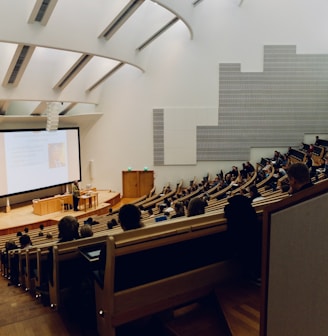
Studying Persian at a University
University programs provide the most academically rigorous and comprehensive Persian training. You will become fluent if you attend the courses and get a degree. These courses require many years of commitment and are best suited for those pursuing careers directly connected to the knowledge of the Persian language like translators or teachers, which given the current state of the market might not be the wisest career choices, especially since you will be competing with native speakers that do not require any formal training to speak their mother tongue.
Costs:
Tuition for foreign students in Hungary is US $2,000–US $3,500/semester depending on the university. Monthly living expenses range from $700 to $1000, especially in cities like Budapest. Rent for a shared student apartment can cost between $400 and $600 per month, while food and groceries average around $200–$300. Public transport passes for students are relatively inexpensive, typically $10–$15 per month. While tuition fees in Hungary are lower than in many Western European countries, the total yearly cost can range from $10,000 to $12,000, depending on location and lifestyle.
Pros:
Deep, structured academic immersion.
Degree qualification or recognized certifications.
Full immersion thanks to real Persian speakers and situations that require language use.
Cons:
Time-intensive and long-term commitment with limited professional opportunities compared to other degrees.
Costs of living in Iran add up quickly.
Difficult to find Persian university courses outside of Iran.


Online Persian Courses
Online courses represent the most time and cost effective solution, with a personalised and immersive approach to language learning, thanks to structured lessons guided by professional teachers. When taken online these classes allow students to interact with their teachers in real time, providing opportunities for conversation practice, immediate feedback and progress tracking. Online courses come with three major downsides due to the extremely high costs of private tuition especially for beginners, varying teaching quality that depends on the individual teacher's experience and the fact that they don't allow the flexibility of other significantly cheaper self-study alternatives.
Costs:
Average Persian 10-week course online with 3-5 live sessions costs US $600-$1,000/month
Private Tutors (available on Preply or Italki) cost US $10–$100 per hour, depending on the teacher’s qualifications
Pros:
Highly interactive with real-time feedback.
Customization, especially with one-on-one sessions.
Accountability and access to experienced teachers.
Cons:
Very expensive with no guarantee of success.
Lower flexibility compared to mobile apps or self-study since it depends on teacher's schedule.
Teaching quality may vary greatly between tutors.


Complete Persian Master Course
Our Complete Persian Master Course represents the most comprehensive and cost effective solution available, offering a fully structured and immersive approach to learning Persian without the limitations of traditional textbooks, university programs, online classes or mobile phone apps.
Designed by Persian language experts, the course provides step by step lessons, clear grammar explanations, foundational vocabulary, real life practise with dialogues, pronunciation guides, exclusive cultural insights, with hours of audio contents. Unlike online courses, it does not depend on teacher availability or fluctuating teaching quality. Unlike university programs, it avoids rigid schedules and high tuition fees. Unlike phone apps, it goes far beyond basic drills by guiding learners from beginner to advanced level and does not feature recurring monthly payments or subscriptions.
Study anytime and anywhere, progressing at your own pace while following a carefully structured course toward fluency in Persian and cultural understanding of its people in less than 30 days.


How difficult is Persian?
The Foreign Service Institute (FSI) of the United States Department of State classifies Hungarian as a Category III language, meaning it is more challenging for native English speakers to learn than most European languages but not as difficult as some East Asian or Arabic languages.
Several factors contribute to the difficulty of learning Hungarian for English speakers:
Unfamiliar Vocabulary – Unlike French, German, or Spanish, Hungarian does not share many cognates (similar words) with English. As a Finno-Ugric language, Hungarian’s vocabulary is distinct from Indo-European languages. For example:
Barát (friend) – no resemblance to "friend" in English
Szombat (Saturday) – looks completely different from other European equivalents
Ma (today) – again, no direct link to familiar words
Complex Grammar with 18 Cases – Instead of using prepositions (in, at, from, to) like English, Hungarian expresses relationships through suffixes, requiring learners to modify nouns based on their role in the sentence.
Vowel Harmony and Agglutination – Hungarian has a system of vowel harmony, meaning suffixes change based on the vowels in the root word. Additionally, it is an agglutinative language, meaning words are built by adding multiple suffixes, often creating long and complex structures.
Flexible Word Order – Unlike English, Hungarian allows words to be rearranged based on emphasis, which makes sentence structure less predictable for beginners.
Our Hungarian language course is designed to maximize your learning efficiency, helping you achieve conversational fluency in just 30 days. Instead of overwhelming you with complex grammar rules all at once, our method builds your language skills gradually, ensuring that you can speak, understand, and engage in real-life conversations from day one.
Why can't I improve in Persian?
One of the biggest obstacles to learning Hungarian isn’t necessarily the grammar—it’s the lack of comprehensive learning resources that effectively bridge the gap between beginner materials and advanced contents. Many learners find themselves stuck after reaching a beginner level because there aren’t enough books, courses, or accessible content. Unlike languages such as Japanese or Korean, where global pop culture (like anime or K-dramas) has created a huge international demand, Hungarian media and culture have not spread worldwide in the same way. As a result, fewer people attempt to learn Hungarian, leading to a smaller selection of textbooks, online courses, and language learning tools.
This lack of resources is further complicated by the fact that Hungarian is not widely spoken outside Hungary, and the Hungarian-speaking diaspora, while significant, is still relatively small compared to major world languages. While languages like Spanish or French have millions of speakers across multiple continents, Hungarian is primarily concentrated in Hungary, with smaller communities in Romania, Slovakia, Serbia, and a few other countries. This geographical limitation makes it harder for learners to find immersion opportunities, practice partners, and real-world language exposure.
We recognize that the lack of quality Hungarian learning resources is a major challenge, and our goal is to bridge the gap by creating content that helps learners progress beyond the beginner level.
If you have any suggestions for future lessons or articles, feel free to send them to pr@learnmagyar.org— we’d love to hear from you and tailor our content to fit your learning needs!
Should I learn Persian, Arabic or Turkish?
One of the biggest obstacles to learning Hungarian isn’t necessarily the grammar—it’s the lack of comprehensive learning resources that effectively bridge the gap between beginner materials and advanced contents. Many learners find themselves stuck after reaching a beginner level because there aren’t enough books, courses, or accessible content. Unlike languages such as Japanese or Korean, where global pop culture (like anime or K-dramas) has created a huge international demand, Hungarian media and culture have not spread worldwide in the same way. As a result, fewer people attempt to learn Hungarian, leading to a smaller selection of textbooks, online courses, and language learning tools.
This lack of resources is further complicated by the fact that Hungarian is not widely spoken outside Hungary, and the Hungarian-speaking diaspora, while significant, is still relatively small compared to major world languages. While languages like Spanish or French have millions of speakers across multiple continents, Hungarian is primarily concentrated in Hungary, with smaller communities in Romania, Slovakia, Serbia, and a few other countries. This geographical limitation makes it harder for learners to find immersion opportunities, practice partners, and real-world language exposure.
We recognize that the lack of quality Hungarian learning resources is a major challenge, and our goal is to bridge the gap by creating content that helps learners progress beyond the beginner level.
If you have any suggestions for future lessons or articles, feel free to send them to pr@learnpersian.org— we’d love to hear from you and tailor our content to fit your learning needs!
Is Persian similar to other languages?
One of the biggest obstacles to learning Hungarian isn’t necessarily the grammar—it’s the lack of comprehensive learning resources that effectively bridge the gap between beginner materials and advanced contents. Many learners find themselves stuck after reaching a beginner level because there aren’t enough books, courses, or accessible content. Unlike languages such as Japanese or Korean, where global pop culture (like anime or K-dramas) has created a huge international demand, Hungarian media and culture have not spread worldwide in the same way. As a result, fewer people attempt to learn Hungarian, leading to a smaller selection of textbooks, online courses, and language learning tools.
This lack of resources is further complicated by the fact that Hungarian is not widely spoken outside Hungary, and the Hungarian-speaking diaspora, while significant, is still relatively small compared to major world languages. While languages like Spanish or French have millions of speakers across multiple continents, Hungarian is primarily concentrated in Hungary, with smaller communities in Romania, Slovakia, Serbia, and a few other countries. This geographical limitation makes it harder for learners to find immersion opportunities, practice partners, and real-world language exposure.
We recognize that the lack of quality Hungarian learning resources is a major challenge, and our goal is to bridge the gap by creating content that helps learners progress beyond the beginner level.
If you have any suggestions for future lessons or articles, feel free to send them to pr@learnmagyar.org— we’d love to hear from you and tailor our content to fit your learning needs!
How to become fluent in Persian in 30 days?
These are 5 proven methods that we have developed as language learners (not only as teachers!) that will help you achieve complete mastery of Hungarian:
1. Immerse Yourself Completely
Surround Yourself: Change the language of your phone, computer, tv, console, News, radio stations, song playlists and streaming apps to the language you want to learn.
Engaging Content: Listen to native music, watch original movies, listen to Podcasts, learn about the Culture and history of the country on Youtube. This will help you stay motivated and reduce the initial frustration.
Make Mistakes: Travel to Hungary where the language is spoken and don't be afraid to engage with the locals. People will be amazed at your efforts to learn their language.
2. Focus on the Most Useful Words and Phrases
Study Efficiency: Learn the top 3000 words in the language, as they often cover 80-90% of everyday conversations. Learning takes time but that doesn't mean it has to take very long to see results.
Real Conversations: Start by practising with Common phrases you'll actually use in real-life situations, like greetings, ordering food, asking for directions, etc.
3. Use Memorization Techniques
Spaced Repetition: Our Courses are based on spaced spaced repetition systems (SRS) to help you memorize words and grammar in the long term and with miminal effort by showing them to you in progression.
Mnemonic Devices: trick your brain and speed up the learning process by trying to think of an example or "story" for each new word / expression you struggle to remember.
4. Learn the Language based on the Context
Practice Makes Perfect: Remember that your grammar doesn't have to be perfect as long as you can be understood! There is no shame in using simple phrases to get you point across.
Shadowing Technique: Repeat in your head after native speakers in real-time while listening or watching videos with original subtitles to improve your comprehension.
5. Consistency is Everything
Daily Practice: Even just 30 minutes a day is more effective than sporadic, long day study sessions. Take breaks often when reading and always have fun to increase productivity.
Compound Results: Small, achievable goals like reading 5 pages daily, or even just watching a movie or playing a videogame every evening produce results over time if you don't see them immediately.
Join thousands of learners who have already downloaded our Complete Hungarian Master Course and started improving their language skills—while we guide you step by step toward conversational fluency in just 30 days.

EXPAND YOUR KNOWLEDGE
If you are serious about learning Farsi, we recommend that you download the Complete Persian Master Course.
You will receive all the information available on the website in a convenient portable digital format as well as additional contents: over 15.000 Vocabulary Words and Useful Phrases, in-depth explanations and exercises for all Grammar Rules, exclusive articles with Cultural Insights that you won't find in any other textbook so you can amaze your Persian-speaking friends and business partners thanks to your knowledge of their country and history.
With a one-time purchase you will also get hours of Podcasts to Practice your Persian listening skills as well as Dialogues with Exercises to achieve your own Master Certificate.
Start speaking Persian today!
For requests or suggestions: pr@learnpersian.org
Learn the Persian language in 30 days thanks to the most complete Grammar, Vocabulary and Culture courses available online for free. Start speaking Farsi today!


© 2026 All rights reserved Unauthorized copy prohibited

